Tuesday, 1 December 2020

Piano VS Organ

At first glance, an organ and a piano may not seem that different. But once an organist or pianist sits down to play, they’ll notice that the type of music these instruments produce is quite unique. What’s the difference between a piano and an organ? Is an organ just a piano with 2 or 3 extra keyboards? Not exactly. These instruments sound different, have varying mechanisms to produce their tones, and require distinct training to play. 


Mechanics

Even though both the piano and the organ have keys, the way that they each produce sound is unique. The instruments are classified as two different types; acoustic pianos are percussion instruments, while the pipe organ is considered a woodwind. This is because pianos use a hammer to hit strings. The sweet melodies of a piano are produced by that hammer; when it strikes, the strings vibrate. Pedals are used to sustain the vibration so that the note continues. The tightness and length of the strings affects the pitch of the note that’s produced. Each key is made up of 2 or 3 strings which vibrate to produce a note. 

Pipe organs, on the other hand, use a system of air that moves through its pipes; they have no strings. The keys and pedals control how much pressure and air flows through the pipes. When a key is pressed, the pressure of the air changes to match the desired pitch. The stops of the pipes are what determines the tone of the note. For example, an organ may have flute or trumpet stops; each one produces the corresponding sound. Unlike a piano, the notes of an organ key will be sustained indefinitely until the player lifts their finger. 

With both pianos and organs, there are digital and electronic variations. A digital piano is easier to maintain than an acoustic piano and is fuelled by electricity. There are several distinct types of organs that use different mechanisms to create sound. Digital organs are affordable, just like digital pianos, and they both use pre-recorded sounds. 


Sound

There is a difference in the type of sound and volume levels between these two instruments. The pedals that players depress with their feet have different functions on organs and pianos. A pipe organist uses pedals to control the opening and closing of pipes, which alters the sounds they create. Acoustic pianos can only sound like one instrument: a piano. But due to the organ’s unique system of pipes and airflow, the sound of this instrument can change significantly. Piano pedals are typically used to sustain one note or a series of notes. 


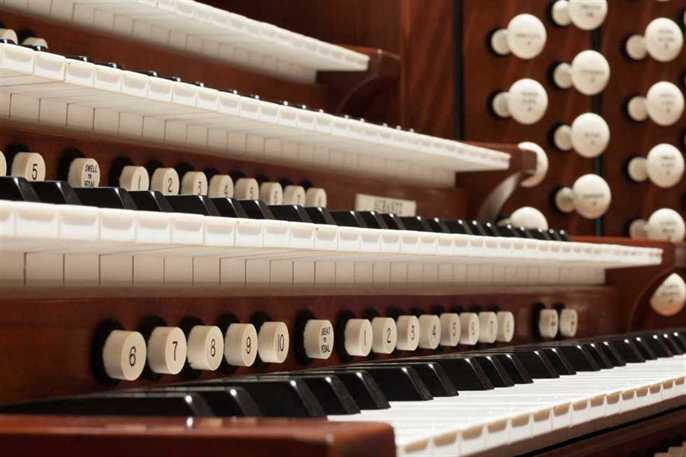
One of the most obvious differences between these instruments is the arrangement of the keys. While pianos have just one set of 88 keys, organs have 2 or 3 levels. Sometimes, they have up to 5! It varies based on how many octaves the instrument has. The keys of a piano are long and resistant, while those of an organ are shorter, narrower, and more responsive to a light touch. It will not change the tone of a note if an organist strikes the key softly or firmly, but the inverse is true for a piano. The harder the pianist strikes a key, the harder the hammer will hit the strings. A grand piano creates loud music, but it can’t compare to a pipe organ; these woodwind instruments were designed to fill a big church with music and are quite loud as a result.


Maintenance

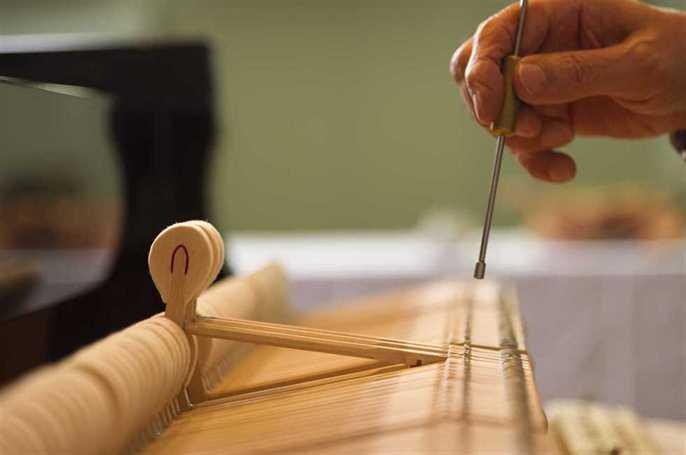
Pipe organs and acoustic pianos both require semi-annual tuning to maintain the right tones and pitch. Tuning forks used to be used for this task, but now most tuning professionals use digital tuners. During a pipe organ tuning, the pipes are tightened and adjusted to match a desired tone. With an acoustic piano, the strings and tuning pins are tightened. Neither will need tuning if they are electric.

The environment of the instruments will have an impact on the sound they produce. As acoustic pianos are made mostly of wood, they are subject to changes in humidity; a room that’s too damp or too dry can lead to issues with the instrument’s mechanisms. On the other hand, the pitch of an organ’s pipes is affected by both humidity and the temperature of the room. 


Cost

A new pipe organ can cost $200,000, and some models are worth millions of dollars. There are, however, several types of smaller, less complex organs on the market that are quite affordable. Just like pianos, their cost range is due to their quality and type. 

Hopefully, you now have a clearer idea of how pianos and organs are distinct from one another. It may have inspired you to start learning one of these complex instruments. But you may find it easier to start playing the organ if you learn how to play the piano first. At Academy of Music, we sell pianos of all kinds, including grand, upright, and digital pianos. View other types of pianos.


source https://www.academymusic.ca/piano-vs-organ/

Types of Pianos

Deciding to learn to play the piano is an exciting endeavour. We’re glad that you’ve chosen to embark upon this journey, and we’re here to guide you through it. One of the first questions you’ll ask yourself is: which type of piano should I buy?

Depending on your priorities, one type may be better for you than another. Are you mainly concerned with your budget? Perhaps you are limited on space. You might have no idea where to begin, which is not a problem; this post is for you! We’re going to break down the differences between the main types of pianos on the market today. At the end of this reading, you will have a better idea of which one will be perfect for you. 


Grand Pianos

This is the quintessential piano; when you picture a piano in your mind, you probably see one of these. They’re big, undeniably elegant, and pricey. The horizontal soundboard allows the hammers and dampers to reset with gravity; for that reason, pianists can play faster on a grand piano than on an upright. There are seven classifications of horizontal pianos, from a petit grand (53 inches/1.3 metres) to a concert grand (9 feet/2.7 metres) but most manufacturers only make three sizes: baby grand, grand, and concert grand. 

Grand pianos offer excellent responsiveness and incredible tonal quality. Grand pianos allow pianists to have better control of the sound they produce. Music that comes from a grand piano is authentic, rich, distinct and loud. They can even sound louder when the top is raised up. The bigger the piano, the more sound it will emit. That is why concert grands are usually used in big music venues; the sound carries beautifully.

Grand pianos have three pedals that are used to change the tone, sustain a select note, or sustain sets of notes. 


Upright Pianos

Also referred to as vertical pianos, these instruments require less space than their grand counterparts. Springs are used to reset the positions of the hammer and damper. This means that they function slightly slower than grand pianos and may require more upkeep. They’re easy to fit inside a home and can sit snugly against a living room or bedroom wall. 

The pedals on an upright piano function differently than their horizontal counterpart; an upright piano has pedals that reduce the volume, mute the sound, and sustain every note. 

Grand pianos and upright pianos are acoustic instruments, mostly made from wood.  This means humidity levels can affect them quite a bit. It also means that you don’t require a power source to play them. Both horizontal and vertical pianos have wonderful virtues and a player will usually buy the kind that meets their room constraints and their budget.


Digital Pianos

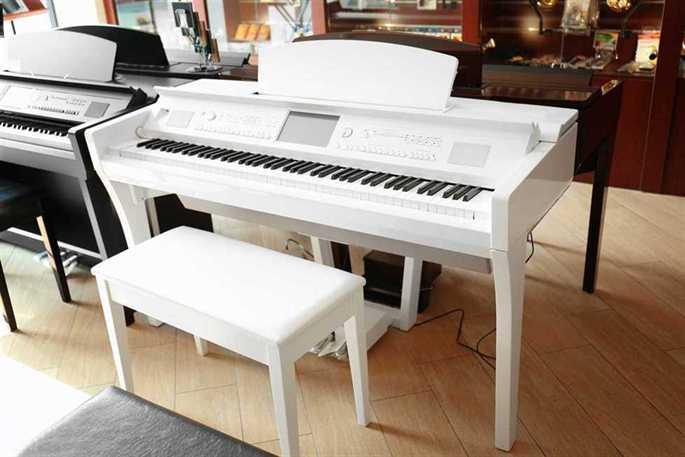
If you’re looking for an affordable piano, digital versions are your best bet. They offer the most variety in terms of sound options, but they lack the authenticity of grand and upright pianos.

Digital pianos are much simpler to repair than acoustic ones. This is because they do not use hammers, dampers, or strings to produce music. Instead, the sound comes from speakers that play a pre-recorded note. Various soundboards can be programmed into the instrument; there are options to make it sound like an organ, wind instrument, or guitar. Digital pianos don’t require semi-annual tune-ups or other maintenance. Since they aren’t made of wood, they won’t be subject to damage from humidity fluctuations. If someone wants to play late at night or when other household members are working, they can plug headphones into the piano. 

But for various reasons, seasoned piano players don’t always like electronic pianos. Some pianists miss the weight and resistance of acoustic piano keys; the way you need to strike them with force to produce a sound. The keys on digital pianos are often hollow and made entirely of plastic rather than wood or ivory. By tapping the key of an acoustic piano softly, the note will be gentle; a hard strike will emit a sharper tone. With digital pianos, it’s hard to replicate this nuance. A digital piano may have a sustain pedal, but it rarely includes the other add-ons like soft or sostenuto ones. Finally, they rely on a power supply to function, which can be a limiting factor (although some use batteries instead of electricity). 


Are you looking for pianos for sale? Take a look at the selection on the Academy of Music website. We offer a range of pianos from digital to acoustic. If you’re curious about our pianos, or you’d like more information about a specific type, give us a call; we’ll be happy to answer your questions and point you in the right direction. 


source https://www.academymusic.ca/types-of-pianos/

Thursday, 26 November 2020

How To Tune A Piano

When you purchase a piano, there is one type of maintenance that is essential to its quality and longevity: tuning. It takes time, patience, a trained ear, and a lot of practice to master the art of tuning. It involves a lot more mechanical know-how and precision than tuning a guitar. But by learning to tune a piano yourself, you can save money on hiring someone else to do it. Better yet, you’ll be keeping your instrument in top shape so that it holds the tuning for longer. If you’d like to learn about the process of piano tuning, we’ve put together the basic steps. 


Why is tuning a piano important?

If you’ve ever heard an instrument that’s played out of tune, you’re familiar with the headache that this sound induces. Something is just off. No matter how proficient you are at playing your favourite song, a piano that’s out of tune will ruin it every time.

There’s a reason why people recommend that you tune your piano twice a year (it’s not just to support the piano tuning industry). The strings in a piano are taut with high tension. Over time, they stretch and change the pitch of the keys. When a piano is tuned regularly, it’s easier for strings to maintain the right tension. But left without being tuned, they stretch more and more over time; this can cause a string to be damaged when played, or it may require a complete restringing of the instrument. It’s always less expensive to maintain your instrument properly than deal with costly fixes.

Before we delve in, a word of warning: tuning a piano is no easy task. You run the risk of damaging the strings or pins by doing it yourself. Stretch a string too tightly and you risk breaking it. This is why most people pay a professional to tune their instruments. This post is intended to give you a clearer picture of what piano tuning entails.

What tools will you need?


  • A lever. This tool (also known as a hammer, key, or wrench) fits around the pins of the piano. 


  • Mutes. To tune efficiently, you need to isolate the note in question. Mutes, which are rubber wedges that fit between strings, help with that. They block the sound from surrounding strings so you can tune one at a time.


  • Electronic tuner. Chromatic tuners will tell you the exact note that you’re playing. It’s invaluable when tuning to get the pitch just right.


  • A light. You’re going to be looking at a lot of strings up-close; a proper light source is invaluable. 


  • A screwdriver. This is an essential tool for pretty much any DIY project. How else will you get under the hood of the instrument?

When you’re shopping for tools, you might be tempted to pick the least-expensive options; after all, what’s the point in tuning a piano yourself if you pay more for tools than you do for a tune-up? But quality pays off when it comes to this type of maintenance, so don’t be afraid to shell out a few extra dollars. 

How do you tune a piano?

Your tools are ready and the house is silent: it’s time to tune your piano. Open the piano up, and let’s get started.

  • First, begin by finding the middle C (the middle octave, or C4). Secure the lever, hammer, or wrench to the pin. 


  • Each note has a certain number of strings; some have three, while others have two. When there are three, tune the one in the centre, but if there are only two, pick the one on the right. 


  • Place mutes on the strings that surround the set to isolate the sound.


  • Turn on your electronic tuner and begin to play the note repeatedly. Turn the pin to the right until it’s in tune with the chromatic tuner. Be careful not to tighten the string too much or it may break.


  • Now, you’ll use that note as a reference to tune each subsequent set. It’s important to use your ear to tune instead of your device. Why? It’s due to the inharmonicity of your piano. This term describes how a properly tuned piano should not be tuned to an equal tempered scale (AKA, your electronic tuner). If it were, some notes would sound too sharp, while others would fall flat. This is due to our sensory perception of the notes. 


  • Adjust the mutes so that your tuned string is free, but the ones surrounding it are not. Use your ear to tune this following set and remove more mutes as you move along the keys.


  • You’ve just finished tuning the first octave. Congratulations! This will be a useful reference for the rest of your strings. For each subsequent octave, use the corresponding note in the tuned set.


If you’ve followed all these steps, you’ll have a beautifully tuned piano on your hands. Reading this content may have inspired you to pick up the phone and call a piano tuner instead. Or, it’s made you more interested than ever in buying a piano for yourself. 

At Academy of Music, we have a wide selection of instruments for you to choose from. Visit our website to view our pianos for sale. We include a tuning with every purchase.


source https://www.academymusic.ca/how-to-tune-a-piano/

What To Look For When Buying A Piano

There are many reasons why someone decides to buy a piano. Perhaps you want to start taking lessons and need an instrument of your own to do so. Or, you’ve been playing for years and decide that it’s time for an upgrade. Maybe your child is of age to start piano lessons and you’d like to buy an instrument for them. In each of these situations, the “right” piano is different for everyone. It takes a good deal of research, some trials, and shopping around before you’ll find the instrument you’re looking for. To help you hone your search, here are some questions to ask yourself when you’re buying a piano:


Which type of piano are you looking for?

There are three main kinds of pianos: acoustic grand pianos, acoustic upright pianos, and digital pianos. Each has advantages and disadvantages, which we’ll cover briefly to give you an idea of which model you’re looking for:


  • Grand piano: These models tend to be the most expensive and take up the most space, but they have an undeniable beauty and elegance about them. The long strings in the horizontal body of the instrument produce notes that are rich and deep. 


  • Upright piano: Due to their shape, upright pianos are easier to store. After you depress a key, it’s reset by a string mechanism, which can create the need for more frequent repairs.  


  • Digital piano: One of the biggest advantages of digital pianos is that they don’t need tuning. They produce various sounds, so select one that feels the warmest and most natural to you. 


Where was it made?

When you’re shopping for a piano in Canada, you need to select one that’s suited for our climate; namely, the levels of humidity that we typically experience. Take note of the humidity in your home. Place your piano in a room that’s away from direct sunlight, windows, or damp areas. Moisture will affect the wooden components on the piano. When the wood shifts, it impacts the strings and pins within the instrument. A dry location is the best place to keep your tuning consistent. 


What would a professional player think?

If you’re just starting out with piano, you may need another opinion on the matter. Do you have friends who specialize in piano tune-ups, repairs, or have years of experience playing? If so, you can ask them to tag along while you shop; offer to pay them a commission for their time. You can even ask your piano teacher for suggestions if you are taking lessons. They will know the right questions to ask store owners about their selection, and they may have a better idea of what’s best for you. 


What do the keys feel like?

The keys of the piano have a certain degree of resistance. Be sure to take note of what you prefer. Are you more familiar with soft keys that are like pillows to your fingers? New beginners tend to prefer this type of piano; the cushioning can alleviate strain on the fingers. More experienced players usually opt for weighted keys that take more strength to play. 


What brand is it?

The top players in the piano game are not always the best makes. Yamaha, for example, makes fine instruments, but some are not designed to handle the humidity in Canada. Models from producers like Kawai and Casio have stood the test of time in producing high-quality pianos. 


How big is it?

You don’t want to buy a piano that’s too big for the space it’s designated for. Be sure to measure the room before you start shopping—the last thing you want is to fall in love with an instrument that you can’t fit into your house.


Is it new or used?

It’s the age-old question: should you get the brand-new model, or select one that’s discounted due to its prior use? When it comes to something as expensive as a piano, this question is important to consider. You want to make sure you’re investing in the right instrument. 

If you choose to buy used, make sure that the instrument has been tuned regularly. Otherwise, it may require multiple tune-ups so that the strings reach the right tension and settle correctly; if it’s been neglected, it may need to be restrung entirely. Make sure to ask how old it is. The factory warranty may have expired, which means you’ll pay more for repairs than you would with a new piano. You may need to tune it more often and refinish scuffs or dents. 


How does it sound?

Each piano has a slightly different tone. Some are clear and bright, while others are softer and more mellow. Shop around for different pianos and try them out to see which one has the tone that you like the most. 


What does it cost?

The final question when it comes to buying a piano: what are you willing to pay for it? Grand pianos tend to be the most expensive; with upright models, you’ll find some savings, but you may need to maintain the strings that experience wear and tear. 

To find a great piano, you must be prepared to pay some money for it. Think of how often you’ll be using this instrument: it will be played during lessons, to learn your favourite songs, to entertain guests, and to unwind after a long day. Settle on a budget that you’re comfortable with and start shopping around. If you find an instrument you like, ask the store what they offer in terms of delivery, warranties, and tune-ups. 


Need a piano? Academy of Music has a great selection of grand, upright, and digital pianos. We include delivery, warranty, and tuning; we’ll even set it up for you! Give us a call to learn more about our wide selection of pianos. 


source https://www.academymusic.ca/what-to-look-for-when-buying-a-piano/

How To Repair Your Piano

The piano may be your vessel to create beautiful and unique music. If there are problems with your instrument, you won’t be able to produce the elegant sounds that your heart sings with. In this post, we’re going to cover common problems that pianists encounter with their instruments. We will include some basic solutions, but many issues will require that you call in a professional piano repair person.


The key is stuck down.

You begin to play your favourite piece, only to discover that each time you strike a key, it stays depressed rather than springing back up. The issue can be with the lever beneath the key; you’ll know this is the case if the key itself springs back up, but when you play it, no sound is produced. This problem makes it impossible to use your instrument and requires an immediate fix. How do you do it?

Humidity is a common culprit behind these sorts of issues. Grand and upright pianos are made of wood, which means that the material swells under damp conditions. This is one reason why you need to take care when cleaning the instrument; if you use too much water, it can warp the keys (which are made of wood). Only the topmost layer is white plastic or ivory). On a particularly damp day, the keys may become sticky. Consider setting up a dehumidifier in your piano room or set up a hot lamp near the instrument to bring down moisture levels. 


Keys are sticking to each other.

Have you ever played a single note, but your piano produced two instead? Even when you wiggle the keys, they remain stuck together. You’ll need to open up your piano to get a closer look at what’s going on. 

There may be a substance that’s causing the jam, like food or crumbs. After years of playing, the oils and dirt from our fingers can slip between the cracks and cause stickiness. It can damage the pins within the levers that help the key return to its resting position. When the pins are exposed to dirt or spilled liquids, they accumulate rust. To remove it, you can buff them with an abrasive material. Alternatively, you can purchase new centre pins and replace the rusted ones.

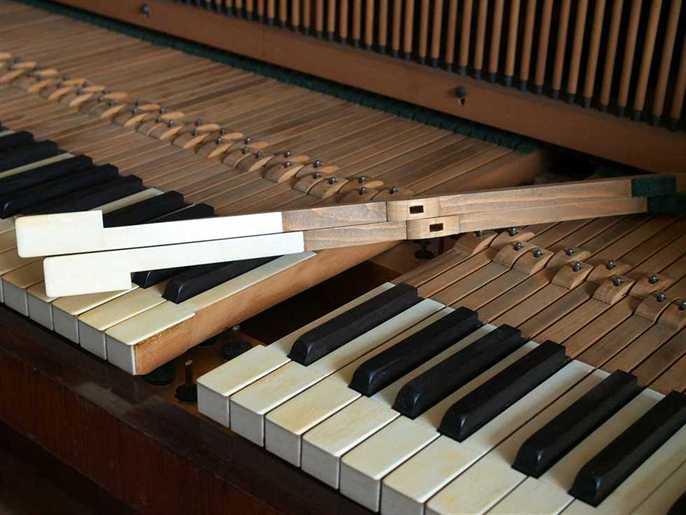
Beneath the key lever is a strip of felt, which is used to help the keys move freely. Over time, this felt can cause the lever to jam; it may become dislocated or swollen. There are a few options that you can do here: one is to gently shave the felt, either with a thin razor or a file. If the felt is folded over, use a small dollop of glue to hold it in place. This should free up your keys so you can play them as you desire. If the piano has been played for many years, the felt may be worn away completely—in that case, you’ll need to purchase a replacement. 


The hammer is faulty.

The hammer is what bears down on the strings when you play a note. It’s an integral component to a high-performing piano. All sorts of issues can arise with this piece of equipment. Let’s go over a few of the most common problems and how you can repair them:

  • The hammer won’t strike the strings. When the hammer hangs in the air but won’t come down, it’s usually due to the components having swelled. They can be loosened with a can of aerosol silicone. 


  • The hammer isn’t working consistently. Every third note that you strike, your piano responds with silence. It’s clear that the hammer isn’t hitting the strings each time. The hammer may be worn down and failing to move. It can happen if the humidity in your room is too high. Perhaps the spring itself is broken and needs to be replaced. Finally, something may have fallen inside the piano, and is interfering with the movement of the hammer.


  • The hammer is loose. A hammer that’s out of alignment can produce a muffled sound. You may be able to tighten it using a screwdriver and flashlight but be careful not to overdo it. 


  • The hammer is broken. You may open your piano and find that the hammer is broken, either at the head, the middle, or the butt. This is an unfortunate issue. You can try to drill a hole and reattach the separated pieces with a shank of wood. This can cause the hammer to be crooked, which leads us to our next issue:


  • The hammer is crooked. A misaligned hammer can result after repairing a hammer for the other issues; tampering with the mechanism can make it off-centre. Heat can be used to soften and then straighten the hammer, but since this is dangerous (especially since you’re working with wood), it’s best to call a professional for this fix.


The tuning pins are loose.

A loose pin won’t be able to hold a tuned string; despite your diligent efforts, it will slip back to being out of tune again in no time. The sound that this problem produces is particularly unpleasant; you’ll know it when you hear it. It’s twangy, sour, and horribly out of tune. What can you do? A piano tuner can help diagnose your issue and find the specific pin that’s causing the problem. They can tighten it with the proper tools and then re-tune the affected strings. Or, they can try to treat it using a liquid that fills spaces in the wood, tightening the pins that way. 


The notes won’t sustain, or they sustain too long. 

Certain songs require resonance to hold notes, while needing to cut others short. If you find that the note cuts off as soon as you lift your finger, or it plays for too long, your damper strings may be to blame. 

When the note hangs for longer than it should, the damper springs are usually the reason. The springs are what put the damper back to its original position after a note is played; if the springs are damaged, the damper will remain on the strings and sustain the note for too long. You will probably need to contact a repair person to replace the springs. Alternatively, there may be an obstruction that’s blocking the damper—remove it to restore the piano’s functionality.

What if the note won’t sustain at all? This is probably due to the sustain pedal. It may need to be realigned or adjusted. 


It’s making strange noises.

You start to play a classic melody, only to discover that something isn’t quite right. What’s responsible behind that odd noise? Here are a few possible problems:

  • You hear a buzzing sound. This sound is often the result of another object falling into the piano and lodging within the wires. Alternatively, there might be something behind the piano that’s tampering with the sound; take a look at the area surrounding your instrument. 


  • You hear a rattling sound. When the strings or wires in your piano are damaged, the instrument can produce an unpleasant rattling sound. Try to figure out which wire is causing you the problem and call a piano tuner to help fix it. 


  • You hear a squeaking sound. As the saying goes, the squeaky wheel gets the grease. Squeaky keys are hard to ignore. The pins probably need lubricant to restore the instrument’s beautiful sound. 


And finally, some general advice to avoid all of the above issues: play your piano often. Frequent use will prevent many of these problems from occurring. Playing the instrument more often will be good for your wallet and your brain; it’s a win-win situation. 


It’s always fun to try a new piano. If you’re in the market for a new instrument, Academy of Music has a great selection of pianos to choose from. We offer grand pianos, upright pianos, and digital pianos from high-quality brands like Kawai and Casio. Call us today and we can help you find the perfect instrument for you and your family.


source https://www.academymusic.ca/how-to-repair-your-piano/

Wednesday, 18 November 2020

The Hardest Instruments To Learn & Why

Mastering an instrument is an incredibly rewarding experience—but some musical instruments are easier to play than others. Perhaps you’ve been practicing for a while, and you’re looking for a greater challenge. Why not step outside of your comfort zone and pick up a new instrument? There’s no shortage of new things to learn in the world; don’t sell yourself short! Almost anyone can learn to play the instruments listed below, even though they’re more challenging than most. 


The French horn.

Of all brass instruments, this one is considered to be the most challenging. For one, it’s quite heavy; if you lack the strength to hold it, playing it will be difficult. You’ll also need strong cardio to manage the breath control that the French horn requires. The placement of your lips needs precision; one wrong move and the note goes out of tune. As challenging as the French horn is, it’s also very loud, which means your mistakes will be magnified—this makes it more intimidating to new players.


The harp.

Listening to someone play the harp is a relaxing, tranquil experience. Playing it is something else altogether. It takes a high level of dexterity, dedication, and persistence to learn this instrument. You’ll need to master hand-eye coordination to be a successful harpist. Level harps have between 20-30 strings, while pedal harps have up to 47. If you gain a proficiency with the harp, you’ll be playing the music of the angels.


The organ.

If you have a background in piano lessons, it will come in handy when you’re learning to play the organ. But instead of one keyboard, you’ll be dealing with two or three. They produce a wide range of tones, from somber melodies to powerful chords. Unlike the piano, organs have no sustain pedals; your fingers need to hold the notes to keep them going.


The violin.

Playing this string instrument is just as intricate as the music it produces. With a guitar, you have frets to guide your finger placement, but these are absent on a violin. It’s also difficult to hold properly; it needs to balance under your chin in a way that lets your fingers move along the frets. This instrument is infamous for its steep learning curve—your housemates may not appreciate the racket you make as you’re learning how to play. 


The accordion.

Remember when you were a kid, and you tried to rub your stomach while tapping your head? If you were able to do it well, you might consider picking up the accordion. It’s hard enough to play one instrument, but the accordion combines three instruments in one! One hand plays the keys while the other manages the bass buttons. Using both hands, the player moves the bellows in and out, as well. Talk about multitasking! 


The drums.

Mastering this percussion kit takes a certain type of player. You need an unshakeable grasp on rhythm to manage drums, cymbals, and foot pedals. Have you ever noticed the intense concentration on a drummer’s face as they play? They are typically drenched in sweat—not only is this instrument mentally taxing, but it requires physical endurance as well. 


Whether you choose a difficult instrument or one that’s easier to grasp is up to you. At The Academy of Music, we offer Thompson music lessons. If you need help learning a challenging instrument, we’ve got your back. Visit our website to learn more about our online and in-home lessons. 


source https://www.academymusic.ca/the-hardest-instruments-to-learn-why/

Monday, 19 October 2020

10 Best Musical Instruments For Beginners

The journey of learning music can be intimidating – how do you begin when there are so many options to choose from? When you start to play an instrument, you want a beginner-friendly one. To ease this process, we’ve put together a list of the instruments that are best-suited for new players:


  • Piano. Nearly every song has the piano in it, which allows beginners to find music they will enjoy playing. This instrument is easy to pick up but challenging to master. If you can’t afford a grand piano, don’t worry! You can use a keyboard instead. 


  • Guitar. From simple melodies to challenging riffs, the guitar has a range of versatility that appeals to many. You can play beautiful classical music, loud rock and roll, and/or complex jazz standards. Rest assured that practicing will build calluses on your fingertips, which will make it easier to play.


  • Clarinet. This option is great for kids because it builds on their skills from learning the recorder. The clarinet is a wind instrument that is played by a grumpy squid on a hit children’s show. They were invented in the 1700’s in Europe and are played around the world, taking centre stage in klezmer music.


  • Saxophone. There’s something sassy and jazzy about a saxophone that so many are drawn to. It’s a popular and stylish instrument, and not too difficult for a beginner to start playing. If you decide to purchase a woodwind instrument, make sure to clean it often – the build-up of bacteria can result in a health condition called “trombone players’ lung”.


  • Trumpet. What’s more triumphant than a ringing trumpet? This member of the brass family is convenient to carry around and it’s affordable. Trumpets are a lot of fun to play, so consider giving it a toot. It might take some time to build lip endurance, but it’s definitely worth the effort!


  • Flute. The sweet, high notes of this instrument are serene and melodic; having a peaceful quality that makes the flute truly unique. These instruments are made from a range of materials including nickel, silver, gold, and platinum – the type of metal used has a slight effect on the sound that’s produced. 


  • Ukulele. This light and upbeat string instrument is perfect for beginners. It only has four strings, so those who are intimidated by a guitar can choose the ukulele instead. The nylon strings are softer on the fingers than the steel ones that acoustic guitars are strung with.


  • Harmonica. It’s not just a kid’s toy – harmonicas can be used to create sophisticated and vibrant music. New players love this instrument because they can improve on their skills quickly; it’s a matter of controlling their breath. Harmonicas come in different keys and sizes.


  • Drums. Simple beats are easy to perform and beginner-friendly, but the drums offer a level of depth that can take any song to the next level. When you start learning the drums, you’ll find yourself tapping along to all your favourite songs. Your timing and dexterity will improve the more you play.

Once you’ve settled on an instrument, the next step is signing up for music lessons in Portage la Prairie. At Academy of Music, we offer online lessons so that you can learn your new instrument in a completely safe and familiar environment.


source https://www.academymusic.ca/10-best-musical-instruments-for-beginners/

Thursday, 15 October 2020

Academy of Music Celebrates 30 Years With Online Expansion To Satisfy Increased Demand For Classes

MANITOBA, Canada – The Academy of Music, one of the leading music lesson providers in Manitoba, Canada, is pleased to announce that they are celebrating their 30th anniversary. Formed in Winnipeg in 1990, the company has continued to grow and flourish over the years, and in the process, has taught thousands of people how to play musical instruments.

The passion and dedication of the owners of the company remain undiminished. In response to increased demand for their services, the Academy of Music is now launching an online music lesson service. This new method of teaching, while exciting and forward-thinking, will provide the tutors with some interesting challenges. Every team member is committed to the process and looking forward to seeing where this expansion takes them.

In addition to teaching people how to play musical instruments, The Academy of Music also sells high-quality, grand, upright, and digital pianos made by Kawai in Japan as well as Digital pianos and keyboards from Casio. These instruments are the perfect complement to the lessons being taught, allowing students to purchase a top-quality, Academy of Music-endorsed instrument easily.

“It is hard to believe that we have been in business now for over 30 years,” said Shawn Coughlin. “The time has just flown past; we are lucky to have a job and a business that we love, and which enables us to spread the joy of music with a large number of people. With the addition of the online service, although there is an element of trepidation from some team members, everyone is excited to learn and experience the benefits of online learning for our company and the students. We look forward to the next 30 years and wonder where that will take us.”

The Academy of Music has been offering high-quality music lessons at reasonable tuition rates since 1990! With the addition of their online instruction via Skype or FaceTime, they now offer lessons throughout Canada and the U.S.A. for the piano, guitar, voice, violin, drums, ukulele, flute, saxophone, clarinet, trumpet, trombone, oboe, bassoon, euphonium, tuba, French horn, viola, cello, double bass, and electric bass. Their mission is to offer the highest-quality, enjoyable musical education and make their lessons convenient and affordable for everyone! As they celebrate their 30th anniversary during these unprecedented times, they are happy to offer their customers a free online lesson to try out the process with no obligation. For more information about the company and to book a class, visit their website at https://www.academymusic.ca


source https://www.academymusic.ca/academy-of-music-celebrates-30-years-with-online-expansion-to-satisfy-increased-demand-for-classes/

Wednesday, 26 August 2020

The Benefits Of Online Music Lessons

This year, online learning has become the new norm. Schools have closed and families have stayed inside in their efforts to maintain physical distancing. But for those who want to further their education during this time, the pandemic might stand in the way of their goals. Thanks to technology, there’s a solution to this problem – virtual lessons. They have risen in popularity since the outbreak of COVID-19. While some students will miss the intimacy of an in-person lesson, online learning has its advantages:

 

Virtual lessons are convenient

When you take lessons in your home, you can do them in your pajamas. Sound cozy? It doesn’t matter if it’s raining or snowing outside – the weather won’t interfere. Another reason they’re convenient is that scheduling is flexible. You can select a time slot that will work best for you. 


You can warm up beforehand

The pre-lesson jitters can get the best of anyone. Travelling to a studio means you have to jump right into the lesson as soon as you arrive. It can greatly ease your tension when you can take the time to warm up before a lesson – at home, you’ll have the time to do so. You can practice the skills that you’ve learned during the previous class so that you’re ready to build upon them. 


Distance is no longer an obstacle

Have you always wanted to take music lessons, but you live too far away from a studio? If you reside in a rural area, making travel arrangements may have prevented you from following your passion. Online lessons make learning music accessible to everyone. All you need is an internet connection and an instrument to begin virtual lessons.


You’ll feel more comfortable

 For some students, it can be anxiety-inducing to travel to a music school and take lessons in-person. They would prefer to be in the comfort of their own homes rather than learning face-to-face. With less anxiety, pupils may feel more comfortable to play to their best ability. Online learning allows anxious students to focus on the material and work on their musical skills. By taking lessons in a familiar place, many students feel more at ease. 


It’s safe

During COVID-19 times, everyone wants to minimize their exposure to the outside world. You won’t be in contact with anyone when you learn online via Skype or FaceTime. Taking lessons using your internet connection means that you are adhering to physical distancing measures. Those who are immunocompromised, have respiratory conditions, or live with vulnerable family members can take comfort knowing that online music lessons are completely safe. 


Use your computer to record the lesson

 Practice makes perfect. Sometimes, there’s too much to absorb in a lesson to retain all the material. Online learning gives you the ability to record lessons and watch them at a later date. Don’t fret if you miss a few chords in your guitar lesson (see what we did there?). Simply return to your virtual recording at a later date to review what you didn’t catch the first time. During challenging parts, you can rewind the video and play it again as many times as you need to. 


You can use the instruments you have at home

If you’re a pianist, then you know that there’s no way you can move that massive instrument to and from your home whenever it’s time for a lesson. Now, imagine this scenario with online lessons – it’s not a problem! When you’re able to play on the instruments that you’re most familiar with, you’ll be able to perform to your highest ability. 


Save travel time

Arranging rides eats up time in your day, and may be complicated. If you need someone to drive you back and forth, they’re stuck waiting while you take your lesson. And what happens if you’re running late due to traffic? With online lessons, all these stressors are avoided. Before, you needed a car and a license to arrive on time. Now, all you need is a computer or phone with a camera and internet connection. No more commuting means you’ll have extra time to play your favourite instrument! 


Your first lesson is free!

Academy of Music offers a free first lesson when you sign up for online music classes in Brandon. This allows you to try our program without any obligations. You’ll be able to decide if online lessons are right for you, with no strings attached (see what we did there?). Visit our website to register for your first free online lesson today!


source https://www.academymusic.ca/the-benefits-of-online-music-lessons/

Friday, 27 March 2020

Online Music Lessons – The Safest Way to Learn!

Online Music Lessons

This year we have gone from “business as usual” to extreme social distancing in only a matter of a few short months. The entire world feels like it’s on lockdown due to the coronavirus pandemic. Otherwise known as COVID-19, this virus has taken the world by storm, and has pushed a lot of people into a corner, wondering what they can do to achieve some sort of normalcy in their otherwise shaken up lives.

With “social distancing” being implemented everywhere we look, it’s incredibly important for everyone to do their part in helping themselves and those around them to foster an environment focused on both safety and health.

Many schools are now closed, and students are being homeschooled, mostly by parents. This has been a major disruption for both parents and students alike, since a lot of parents are still working (to some degree) either at home or at their place of business. Social media is full of uncertainty, with the popular question, “who will teach my kids?”

We are extremely fortunate to live in a digitally connected world, from Facebook and Instagram, to Netflix and YouTube. At Academy of Music, we’ve been offering online music lessons for quite some time, but lately we’ve seen a lot of students move from traditional in-person music lessons to online learning.

All you need is a high-speed internet connection, and a computer, tablet or phone that supports video communication, and you have everything you need to be able to take part in online music lessons.

Our music teachers are passionate about teaching their students one-on-one, so taking the lessons online is a smooth transition. The best part about online lessons at this time is you can keep learning, while also maintaining social distancing! With so many people at home, your lesson schedule can also be quite flexible, and be worked around your schedule. Your teacher will work with you to figure out a time that best suits the both of you, and we know it will be something you can look forward to week in and week out.

Another great aspect of taking online music lessons at home, is less travel time for those that would normally have to attend a lesson outside of their home. This time saving opportunity allows for increased productivity, to be able to spend more time practicing, or other activities that help us grow. Plus, when utilizing online learning, you can sign up and start taking lessons with us anywhere in the world! No matter how far away you live, it will be like our music instructors are right there with you in your home – in real time!

The Academy of Music offers music lessons for all ages, and we have a lot to choose from! Just check out the Instruments tab in the top menu and you can see that we offer something for everyone. Our secure payment option is a breeze, and you can get enrolled in just a few clicks, making being stuck at home a lot more enjoyable right now.

This world pandemic has forced so many of us to make adjustments. At this time, it’s too early to tell when life will get back to “normal”, but that doesn’t mean we need to stop everything we were doing. History has proven that music will always play a major role in our lives, even when our lives aren’t easy.

We need to focus on the good, more now than ever, and let our passions flow wherever we are.


source https://www.academymusic.ca/online-music-lessons-the-safest-way-to-learn/

Friday, 13 March 2020

Where Does Your Taste In Music Come From?

music-tasteHave you ever wondered why people have different tastes in music? Some prefer slower, quieter music, yet some love their music fast and loud. Is it random? Are some of us predestined to like certain chord progressions over others? Does our DNA dictate our preferences between complex rhythms over simplicity? Are we born with a certain musical connection, pushing us towards certain styles of music?

As it turns out, our musical preferences start at a very early age, which is when the seeds are first planted. When a baby is born, they enter the world as a blank slate, an empty canvas. They are capable of speaking any language, and can make any sound for all the languages out there in the world. During the first year of development however, things start to change. Due to their surroundings, the synapses in the brain start to form for certain sounds, while at the same time begin to exclude others that aren’t needed. The same thing starts to happen with music as well. During the first 6 months, babies can follow the syntax of any style of music. As they are exposed to the music of their time and culture, those same connections are forged.

Our own personal musical taste really starts to form in adolescence, when we begin to realize our own identity, which is a way for us to plant our flag so to speak, to say “this is who I am.” We crave to be seen as individuals, which can translate into the rebellion we so often see in the young. This can cause our musical tastes to go against what our parents enjoy. The walls of a teenage bedroom are often adorned with posters of music that they connect to, with their closet full of shirts bearing images and logos of their favourite musical artists.

As we move through childhood, we are mostly surrounded by the music that our parents listen to, but between the ages of 12 and 22, there is what we experience called a ‘reminiscence bump’. This is the time of raging hormones, when we experience so many ‘firsts’ – first kiss, first heartbreak, first live concert, etc., and everything around us feels like it’s the most important thing in the world. During this time, we become emotionally charged as we connect to certain genres of music, and form friendships with people that have the same likes and dislikes as we do. The music we listen to also helps to validate how we’re feeling at the time, and can greatly help in getting us through challenging moments as well. In our early 20’s, this extreme connection starts to subside, and our musical tastes become much more solidified.

Although most people like to hear music from new bands and artists, our desire to seek them out can start to subside a little, as we become more comfortable with the music that has formed us, and we feel that it doesn’t seem to compare to new music on an emotional level as our favourites from the past.

As we get older, we can be sitting in the car or a restaurant, when suddenly a song from our past comes on the radio, overwhelming us with emotion, and bringing back feelings and memories from a nostalgic time. Music has a way of connecting with our emotions and memories on a very deep level, and hits us to the core of who we are.

Our musical taste doesn’t just say who we are, it says who we were. Our musical tastes and our music library can attest to that fact – that we’ve experienced so many things, both positive and negative. We may not be able to physically go back in time, but we can listen to certain songs and through our memories and emotions be instantly transported back to a time when everything was the most important thing in the world.


source https://www.academymusic.ca/where-does-your-taste-in-music-come-from/

Friday, 14 February 2020

Top 10 Love Songs

What do you think of on Valentine’s Day? Your significant other? Cinnamon hearts? Roses that suddenly cost a lot more compared to any other time of the year? At Academy of Music, we’d like to take this opportunity to remember some of the greatest love songs ever written. It was impossible for us to mention all of them, and we could only scrape the surface, but here are our Top 10 Love Songs, to commemorate Valentine’s Day!
 

I Will Always Love You – Whitney Houston

Although this song was originally written and recorded by Dolly Parton in 1973, the 1992 version by Whitney Houston is the one that most people are familiar with. Whitney recorded her version of the song for the 1992 film The Bodyguard, which starred both her and Kevin Costner. If you head over to YouTube, you’ll see that the official music video for the song has been viewed almost 1 BILLION times. That in itself speaks to the power of this love song as one of the most important and effective ever written.


My Heart Will Go On – Celine Dion

Hailing from Canada, Celine Dion released this song in 1997 on her fifth English-language studio album, Let’s Talk about Love. This incredible love song serves as the main theme from the movie Titanic. What a lot of people don’t know, is that song almost never made it into the movie. After the music was first composed, and the lyrics written, Celine wasn’t sure if she wanted to record it. Her manager and husband René Angélil ultimately was able to convince her to sing on a demo version of the song, which was then listened to by the director of Titanic – James Cameron. After playing it a number of times, Cameron approved, and the song was included on the film, making historic waves that aren’t seen often.

You’re Still the One – Shania Twain

“You’re Still the One” was co-written by both Shania and John “Mutt” Lange. The song was written amidst criticisms that her relationship with Lange was solely a stepping stone for her to advance her career. The critical press influenced their intention to write the song, which became one of the biggest love songs of all time.

Still Loving You – Scorpions

“Still Loving You” isn’t just a love song, it’s a power ballad. German band Scorpions released the song in 1984. The song is a story about failed love, and although the couple recognize that it may be over, they decide to try again. Although Scorpions were considered heavy metal at the time, their performance of this musical delicacy solidified their ability to appeal to the masses, and touch our hearts.

Something – The Beatles

What top 10 musical list isn’t complete without a song by The Beatles? “Something” is from their 1969 album Abbey Road, and was written by George Harrison, who is widely viewed by music historians as having the songwriting abilities at the level of John Lennon and Paul McCartney. The Beatles have been, and always will be one of the most influential bands of all time.

Everything I Do (I Do It for You) – Bryan Adams

This song is by none other than our very own Bryan Adams, another legendary Canadian singer-songwriter. It featured on two albums at the same time: the soundtrack for the 1991 film Robin Hood: Prince of Thieves, and on Adams’ sixth album, Waking Up the Neighbours (1991). It was a huge hit, and continues to be a relevant love song for today and the years to come.

https://youtu.be/vFD2gu007dc

Somebody to Love – Queen

One of the greatest bands the world has ever seen, Queen, released this hit on their 1976 album, A Day at the Races. Similar to their previous hit “Bohemian Rhapsody”, it includes complex harmonies and guitar solos. “Somebody to Love” was written by Freddy Mercury, the band’s singer and main songwriter, and was influenced by his love for Aretha Franklin.

November Rain – Guns N’ Roses

Guns N’ Roses (or GNR for short) released “November Rain” way back in 1991 on their third studio album, Use Your Illusion. The song was written by Axl Rose, and became a huge chart topper around the world. This hard rock power ballad also contains an amazing guitar solo by Slash, one of the greatest guitar players in the world. “November Rain” is also pretty long compared to the average popular radio song, and holds a record of being one of the longest songs to achieve regular radio airplay.

Nothing Compares 2 U – Sinéad O’Connor

Did you know that this song was originally written and composed by Prince? It’s true! His side project, a funk band called The Family, released the song on their self-titled album The Family (1985). The song was later made famous by Sinéad O’Connor in 1990, when she covered it for her second studio album, I Do Not Want What I Haven’t Got.

“I Can’t Stop Loving You” – Ray Charles

This popular love ballad was first written and composed by country singer, songwriter and musician Don Gibson. He first released it in 1958, and since then, it’s been recorded by more than 700 artists! Ray Charles covered the song in 1962, at which time it reached number one on the Billboard Hot 100 for five weeks. It’s an oldie and a goodie, and one of the greatest love songs ever written.

https://youtu.be/w-YqaTDDCDM


source https://www.academymusic.ca/top-10-love-songs/

Friday, 24 January 2020

What is the best age to start music lessons?

The age-old question of when to start music lessons is a good one!

History is full of child prodigies in the world of music, from Beethoven to Stevie Wonder. Whether in school or church, almost everyone knows of someone in their own family, or another, that has a tremendous gift for a musical instrument. This often allows parents to feel pressured to enroll their child into music lessons at a young age. Could this young exposure to music be one of the secrets to success? There are studies that have shown this to definitely be a helping factor!

On the other hand, we’ve all heard from someone that says they were “forced” into taking music lessons at a young age, which brought them to a point of disliking not only the lessons, but the instrument itself. Parents that have had this sort of upbringing tend to lean towards waiting for their kids to show an interest in music; for their child to become a bit older before making a decision whether or not they even want to play a musical instrument. There is nothing wrong with this approach either.

Since each child is different, both of these approaches can be the right way to do it.

One thing is for certain, and that is when a child is young, and their mental abilities are still in the prime stages of development, they are in the perfect place to be exposed to music.

The question that should be asked is not so much at what age to start music lessons, but what is the goal of the music lessons? A very young child isn’t exposed to an instrument to master it, but instead to gain experience and develop a positive relationship with music. If this is your goal, then “lessons” could start any time after birth. These lessons wouldn’t necessarily be what most would consider formal lessons. They would focus on immersing the child in a musical environment, through simple activities like musical games, or swaying and dancing while singing or playing a musical instrument for the child.

Around the age of 3, the child could be ready for an introduction to more formal lessons. At this age, the goal would still have a focus on things like finding the beat within a piece of music, or identifying an instrument or melody.

At age 5, a lot of kids have developed enough of a musical foundation that has prepared them for formal music lessons. At this age, the goal of the lesson should still be to further their understanding of music. Piano and violin are two of the most popular instruments to start learning at this young age, but other good possibilities include the guitar, ukulele and recorder.

By the age of 10, children will not only have a number of skills connected with their instrument of choice, but also possess the physical strength to try other, larger instruments. Some of these could include a brass or larger stringed instrument that would require more strength and stamina. At this time in their musical upbringing, the goal of the music lessons starts to transition from building experience with music, to improving on their performance ability.

Please keep in mind that all children are different, and these are only guidelines. The important thing to remember is that exposing a child to music at a young age has a lot of benefits in their development, and can open the door to a life full of amazing experiences and opportunities.


source https://www.academymusic.ca/what-is-the-best-age-to-start-music-lessons/

Friday, 10 January 2020

Where to See Live Music in Winnipeg

Live Music WinnipegHappy New Year! Not only is it a new year, but it’s also a new decade! They say hindsight is 20/20, but we need to keep looking forward 🙂

New Year’s resolutions are made every year, and one that we can really get behind is wanting to get out and see more live music. Winnipeg winters are newsworthy around the world, but they are also a great time to get out and be entertained in one of most musical cities in the world.

Here are the top 10 places in Winnipeg to see live music (in no particular order):

1) King’s Head Pub
Located at 120 King Street, in the heart of the Exchange District, the building was constructed in 1896 and in August of 1987, the Kings Head Pub first opened its doors to Winnipeg as the first pub in the city.
Every weekend, The King’s Head hosts a variety of bands, playing both original and cover songs. It’s also right across the street from The Cube in The Exchange District, which during the warmer months always has something entertaining going on. A pint, a patio, and entertainment oh my!
You can visit their website here

2) The Garrick
Calling 330 Garry Street home, the historic Garrick is proud to host a lot of great live acts in the heart of downtown Winnipeg.
The Garrick first opened in 1921 as a movie theatre and now hosts an array of concerts featuring rising local artists and international acts.
Some bands you may have heard of that have played here are Sarah Harmer, Propagandhi, and The Beaches (who also played during the pre-game show at the 107th Grey Cup held in Calgary, Alberta).
You can visit their website here

3) The Pyramid Cabaret
Located at 176 Fort Street, close to iconic Portage and Main, The Pyramid Cabaret has been a mainstay for both local and touring acts since the 1980s. Founded in 1987, it used to be called The Spectrum Cabaret, but changed its name in 1995 to The Pyramid Cabaret.
Some notable acts that have graced its stage are The Watchmen, Sloan and Goo Goo Dolls.
If you’ve never checked it out, this could be the year you do!
Visit them online here

4) The Good Will Social Club
The Good Will Social Club is a bar, venue, eatery and coffee shop located at 625 Portage Avenue in Winnipeg’s West End. It’s an excellent place to discover local, national and international music! The venue is nice and open, with a stage large enough for almost any act that plays.
The Good Will also has something going on practically every single day of the week, so there’s always something fun to do in downtown Winnipeg!
Check out their calendar here

5) The Handsome Daughter
The Handsome Daughter is a live music venue located at 61 Sherbrook Street in the West Broadway neighbourhood. They host bands and DJs every weekend, stand-up comedy every Thursday, trivia nights, retro video game tournaments, art shows, poetry slams and countless other events.
This is a fantastic little gem that is worthy of an outing!
Check them out here

6) Centennial Concert Hall
For an experience like no other, the Centennial Concert Hall is a first choice. Home of the Royal Winnipeg Ballet, Winnipeg Symphony Orchestra, and Manitoba Opera, this live venue is sure to impress! No matter which event you attend, your eyes and ears will be sure to thank you.
See upcoming events here

7) The Times Change(d) High & Lonesome Club
Located at the corner of Main Street and St. Mary Avenue in the heart of Winnipeg, The High & Lonesome Club runs deep in Winnipeg’s veins of musical heritage. If you love the blues, you may just find your second home. If you love Big Dave McLean, you *are* home!
Check them out here

8) West End Cultural Centre (WECC)
You can find The West End at 586 Ellice Avenue in… you guessed it, the West End!
Established in 1987, the WECC is a non-profit, charitable organization that showcases local, national, and international artists. This live venue has a great atmosphere, great people, and even greater talent that graces its stage.
Check out their upcoming shows here

9) The Park Theatre
After 15 years since the doors opened, The Park Theatre has grown into one of Winnipeg’s premier live event venues. The building is a renovated movie theatre that first opened in the fall of 1915.
Located at 698 Osborne Street, they offer events ranging from live bands, to “cult classic” movies like The Fly, Sean of The Dead, Monty Python and This Is Spinal Tap.
See their upcoming events here

10) A live music venue list wouldn’t be complete without a shout-out to our very own Bell MTS Place located in downtown Winnipeg. Home to our NHL team The Winnipeg Jets, it’s seen a lot of musical action over the years, from some of the biggest musical acts on the planet. A few of the big names that have rolled through are:
Pearl Jam
Selena Gomez
Iron Maiden
The Smashing Pumpkins
Mötley Crüe
Cher

There are so many more but this short list just gives an idea of the caliber of live music you can see in Winnipeg!


source https://www.academymusic.ca/where-to-see-live-music-in-winnipeg/